Chapter 5: The Moral Diagnosis: When Problems Become Judgments
The final pillar of the case for keeping is understanding a fundamental piece of our cultural software: the inability to separate a problem from the person.
When presented with a problem or an unconventional choice, the default Indian response is not analytical; it is a Moral Diagnosis. The question is not “Let’s examine this issue,” but rather, “What is the character flaw in this person that led them to this issue?”
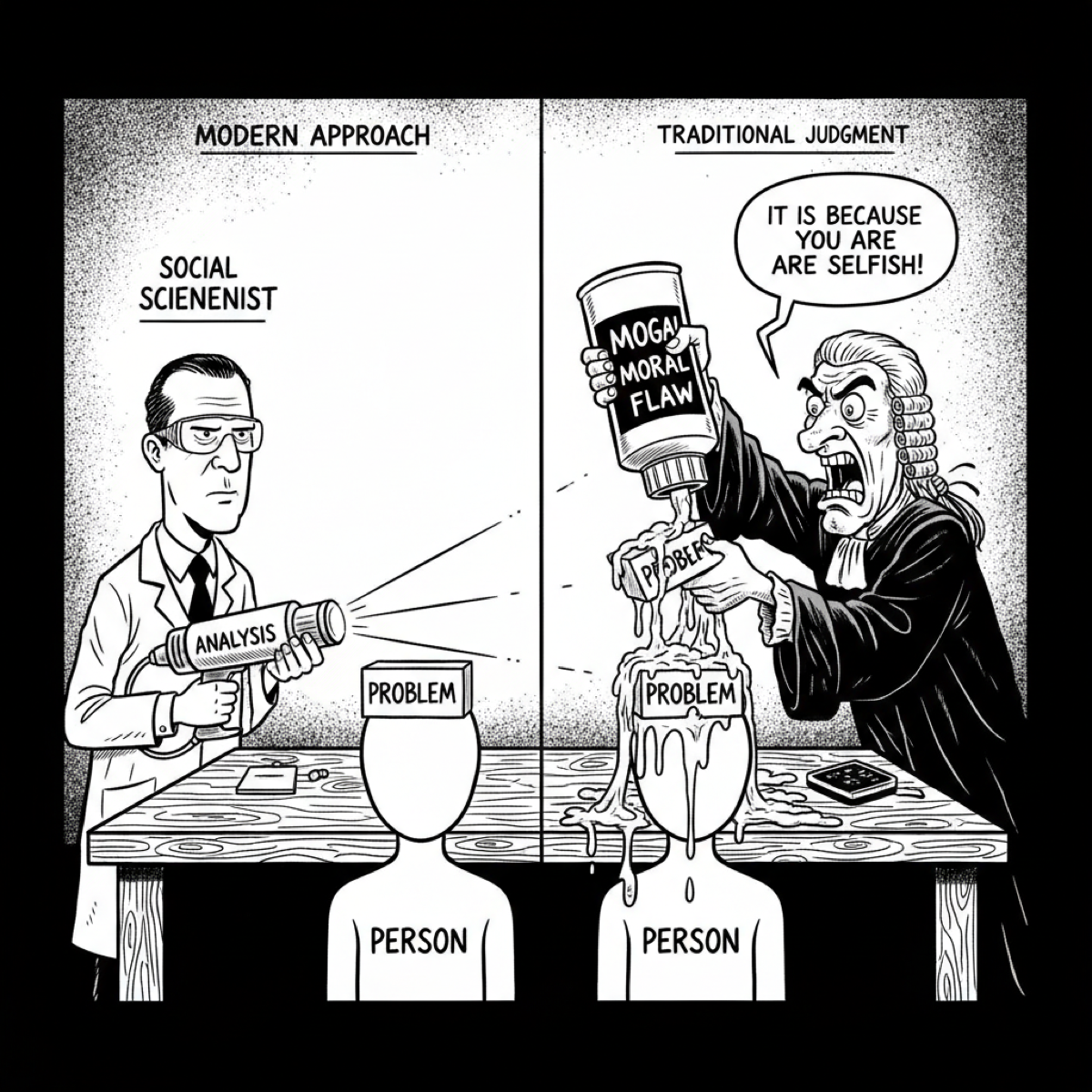
Consider the difference.
The Problem: “I am unhappy in my marriage.”
- Non-Judgmental Analysis: “What are the sources of unhappiness? Communication? Finances? Intimacy? Let’s break it down.”
- The Moral Diagnosis: “You are being selfish. You are not adjusting enough. Marriage is about sacrifice. What is wrong with you that you can’t make it work?”
The Unconventional Choice: “I want to take a year off to travel instead of taking that promotion.”
- Non-Judgmental Analysis: “Interesting. What do you hope to gain from that experience? What’s the financial plan? What are the potential risks and rewards?”
- The Moral Diagnosis: “You are being irresponsible and lazy. You are throwing away your future. You are ungrateful for the opportunities you have.”
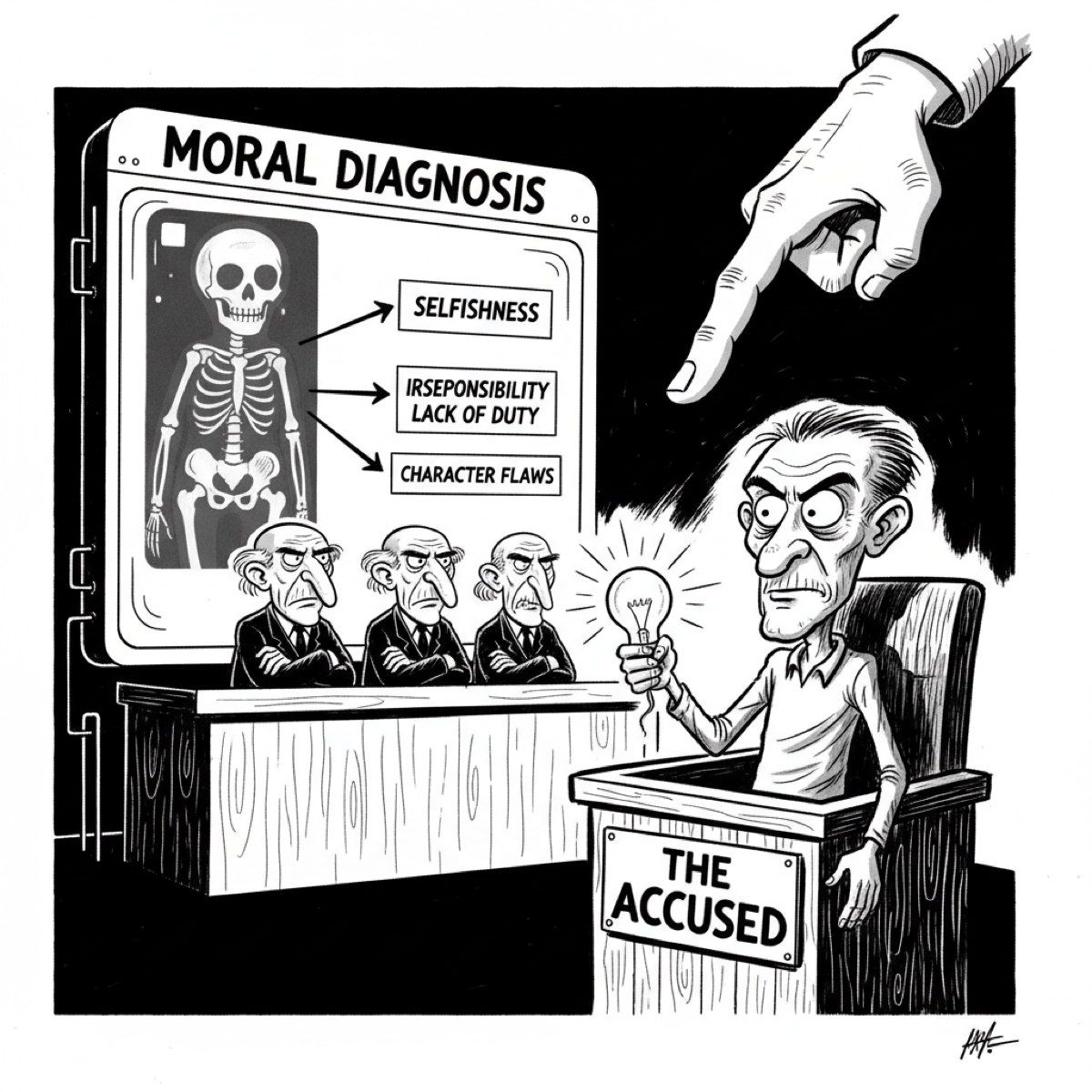
This reflex to perform a Moral Diagnosis is devastating. It shuts down all exploration, because people become terrified of even admitting they have a problem. It forces you to solve the wrong issue: instead of solving your actual problem (“How do I build a career I love?”), you are forced to solve a social problem (“How do I manage my parents’ disapproval?”).
Most importantly, it kills innovation at the root. An unconventional idea is an experiment. An experiment requires the possibility of failure. But when a Moral Diagnosis is the default, failure is not a data point; it is a permanent stain on your character.
This is why you must protect your new ideas. You must create a space where they can be explored and tested without the immediate threat of a moral judgment. You must learn to keep your experiments private until you have results. You are not being secretive; you are being a good scientist.