Chapter 7: The Authority Trap: Why You Must Keep Things From People You Respect
You believe that respect is a currency you grant to the worthy. A mentor, a parent, a brilliant friend—you lend them credibility, and in return, you get wisdom. But there is a hidden transaction, a dangerous side effect that is rarely discussed: when you grant someone authority over your mind, you also grant them the power to define your limits.
Your mental health, your confidence, and your very perception of what is possible for you are profoundly impacted by the people you hold in high esteem. This is the Authority Trap.
The trap isn’t that respected people are secretly malicious. It’s that they are human. Their advice is not pure, objective truth; it is a product of their own history, their own fears, and their own risk tolerance. The person you respect can absolutely screw you over, not with a knife in the back, but with a well-meaning word of caution that plants a seed of doubt you can never uproot. They can “eat you alive” with concern, smothering your fragile ambitions with a blanket of practicality.
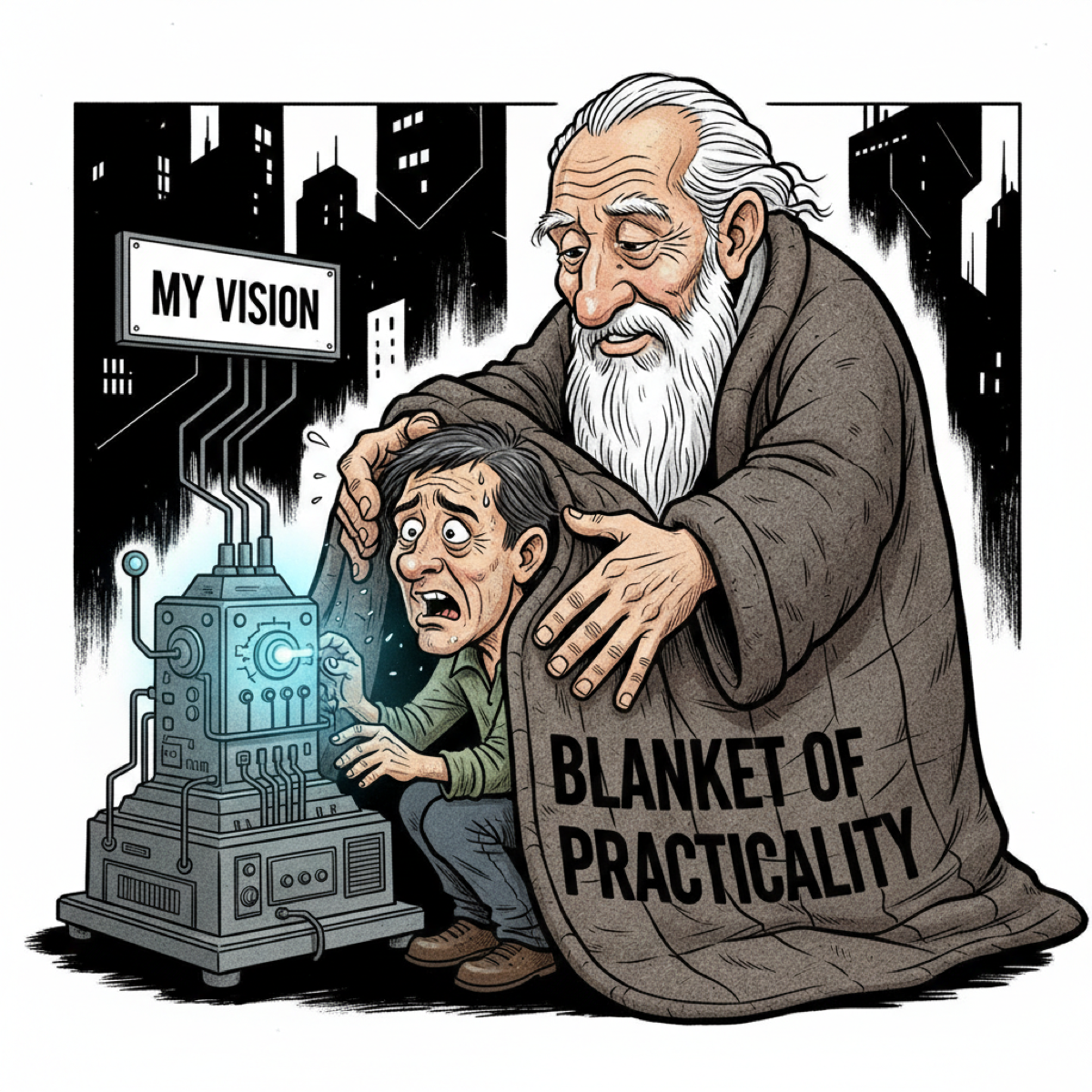
Indians, in particular, need to learn this lesson. In a culture that prizes respect for elders and authority, challenging the worldview of a respected person feels like a betrayal. So we do the opposite: we overshare, seeking their validation for our most fragile ideas. We hand them the blueprint to our dreams and ask, “Is this feasible?” We are asking a person who built their life in a different world, with different tools, to approve a design they cannot possibly comprehend.
The solution is not to disrespect them. It is to protect yourself with boundaries.
You must recognize that everyone has a limit—a limit to their understanding, their courage, and their ability to see your vision. Your responsibility is not to convert them, but to protect your work from their limitations. This requires a form of “face-saving,” a charade, if you will. But do not mistake this for being inauthentic. It is not a lie; it is a firewall.

It is the polite nod when unsolicited advice is given. It is the vague, non-committal answer when asked about your unconventional career plans. It is the curated presentation of only your successes, not your vulnerable, in-progress struggles.
This performance is not for their benefit; it is for yours. It is the act of building a safe container for your ambition, a space where the opinions of others—even the ones you love and respect—cannot suffocate your potential. You are not giving useless advice; you are describing a fundamental survival skill for anyone who wants to build a life that is truly their own.