Chapter 11: The Private Laboratory: Building Your Space for Innovation
An unconventional idea is an experiment. And every experiment needs a laboratory.
A laboratory is a safe, controlled environment where you can test a hypothesis without the contamination of the outside world. Failure inside a lab is not shame; it is data. It is a valuable, necessary part of the process of discovery. You learn from it, adjust your experiment, and try again.
Failure outside the lab, in the public square of Indian social life, is not data; it is a permanent stain on your character. This is the consequence of the Moral Diagnosis.
When you disclose your unconventional idea prematurely, you are inviting the world into your delicate, sterile laboratory. But because our culture defaults to a Moral Diagnosis, people don’t enter as fellow scientists eager to observe.
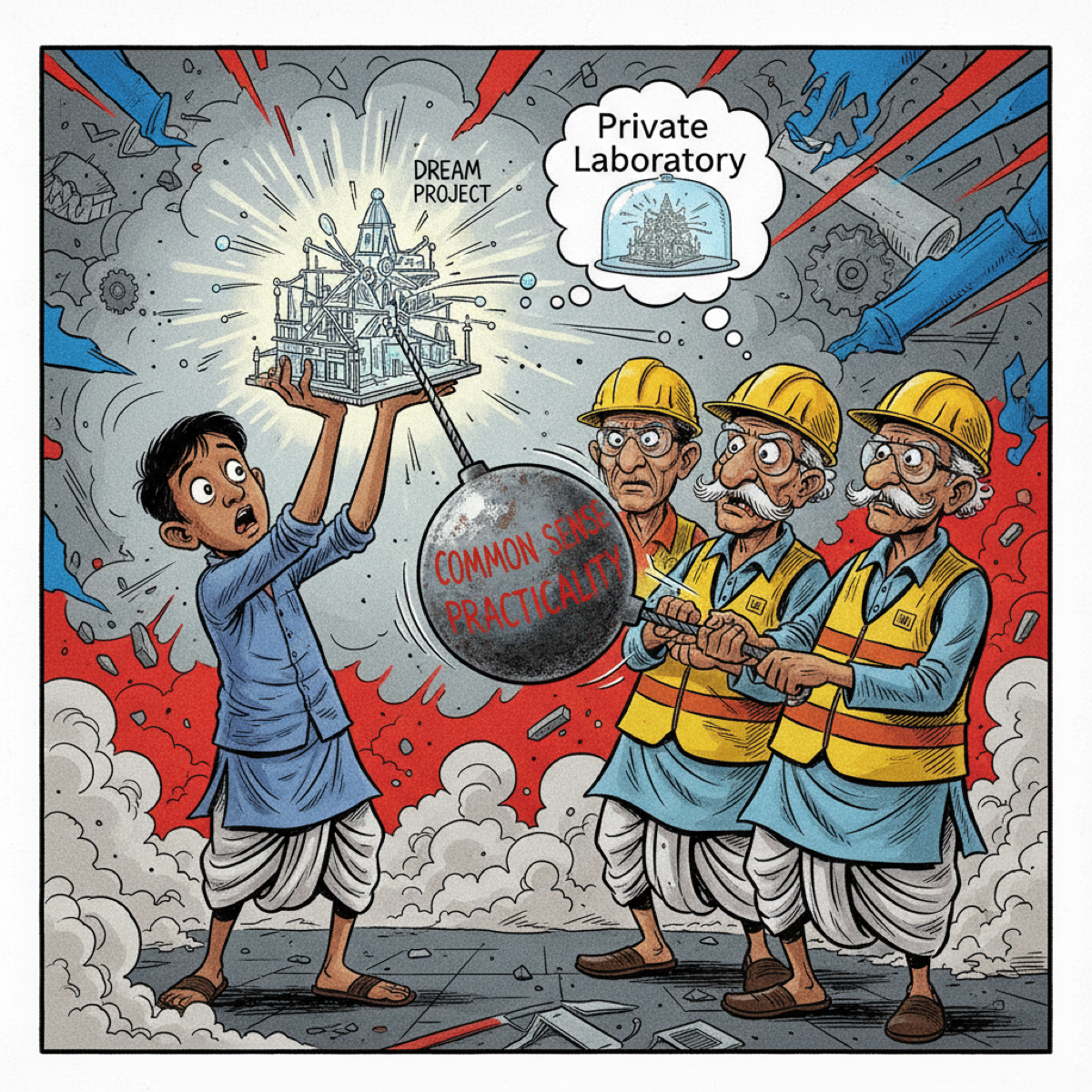
They enter like a demolition crew, shouting that your experiment is morally flawed, that you are a bad scientist, and that you should be doing the same “proven” experiments as everyone else.
This is why the most important practice for a life of growth, innovation, and authenticity is the creation of a Private Laboratory for the soul.
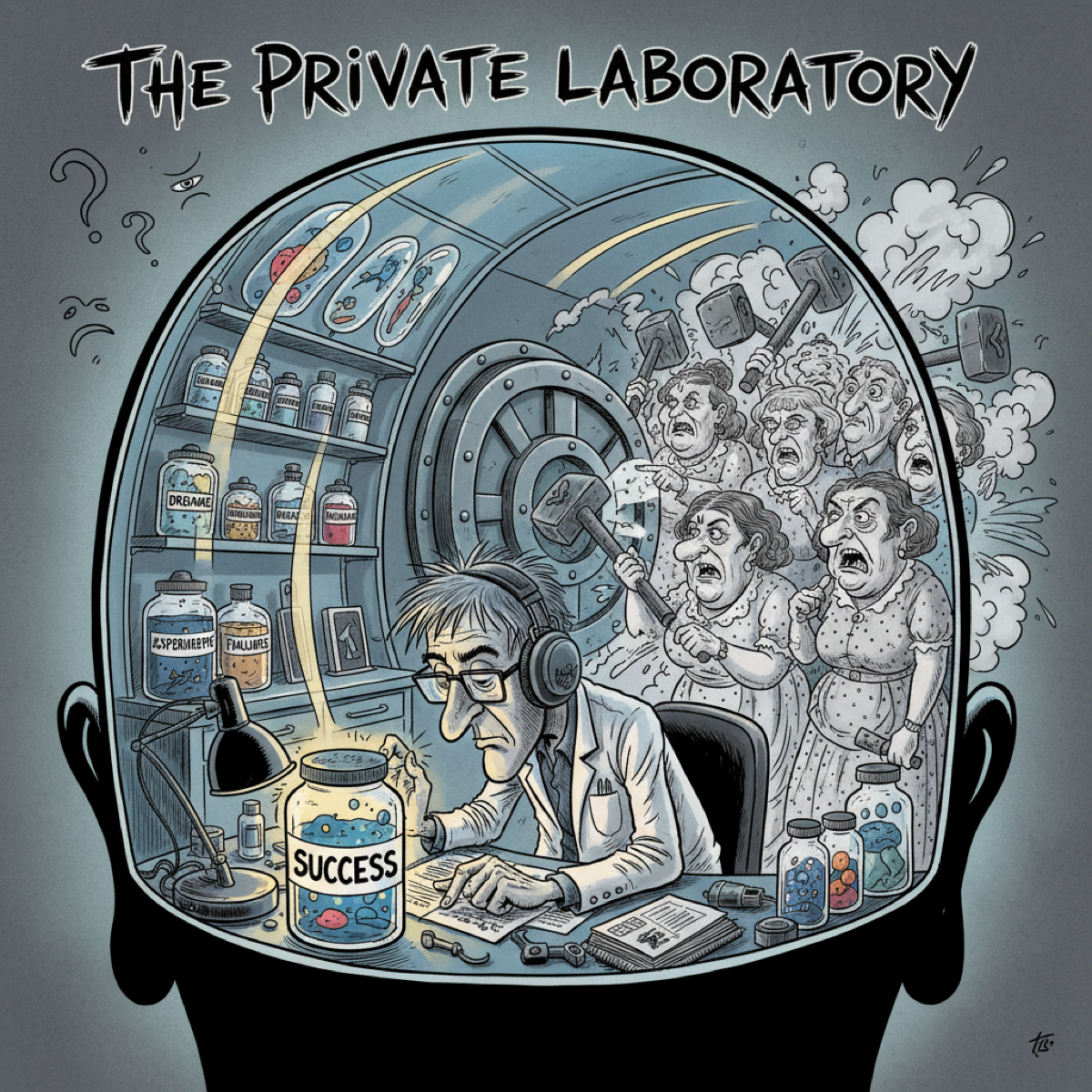
“Keeping” is the active, daily work of building and defending the walls of this laboratory.
You build it by not disclosing your hypothesis prematurely. You do not need external approval to begin your experiment. Your idea to become a chef, a writer, or an entrepreneur is a hypothesis. The world does not get a vote on whether you are allowed to test it.
You build it by running your experiment on a small scale, in private. You take the online course, you write the first ten pages of the book, you build the prototype on weekends. You learn, you fail, you gather data, and you adjust, all within the safe walls of your lab.
You build it by only revealing your results, not your process. You don’t show the world your messy lab notes, your failed attempts, your moments of doubt. You show them the finished product, the successful outcome, or the valuable wisdom you gained from a failed attempt.
By the time you disclose your choice, it is no longer a fragile, unconventional idea. It is a part of your reality. It is a fact. And it is much harder for the world to perform a Moral Diagnosis on a fact than on a dream.